I was a Youth Minister for eleven years. I viewed weekly youth group meetings as the necessary framework for inviting the next generation into an authentic Christian faith. For the youth, however, the high points to our program year were the lock-ins and retreats. I faced these nocturnal commitments with a healthy level of dread. I arrived at the church early to ensure that plans were in order to keep them safely engaged for the night—or, at least, to keep them alive. I would hear the first car door slam as parents happily deposited their hormonal child into my care for 15 interminable hours. I trembled as the thundering footsteps of energetic teens reverberated down the cloistered walkway outside my office window. Excited voices burst into the church building. Let the games begin!
An essential element to any lock-in was a spooky game of Sardines (aka, Hide-and-Seek). One person cooled their jets for ten minutes, giving the rest of the group time to sequester away in God-forsaken nooks and crannies to our enormous church basement. Long hallways, rooms with no egress, a wide-open dining room and endless storage closets offered ample opportunity to remain hidden! The game was always played in the dark of night and those hiding could have no source of light. Only the “IT” person could carry a flashlight to begin the aggressive search for fugitives. (This was before the days of cell phones so keeping everyone in the dark was much easier!) The prime hiding space was a large storage room situated beneath the chancel area of the gothic sanctuary. A narrow spiral staircase wound some 15 feet up to the ceiling where a trap door, I was told, opened to the massive pipe organ. A small group of us ran for that space when the ten-minute countdown began. With the room illumined, we found our spots. Then the person closest to the light switch turned it off and we sweated out the wait.
One year I was the one who climbed to the top of that ladder. We crouched, wordless, in the blackness, barely breathing, waiting for the inevitable intrusion of the flashlight. The IT person always did an obligatory sweep of that room. We held our breath as the beam of light nearly exposed our secrets. Fortunately, the light didn’t rise to the heights of my anxious perch. The room was creepy enough that no one ever dared enter into it even with the advantage of a flashlight. I was always amazed at how I became gripped with fear in this annual game of Sardines. “Am I the youth group leader or what,” I chided myself? I questioned my vocational choice as my legs cramped from an extended period of unnatural squatting.
When the cry sounded for all to come “home”, we still had to find our way out of the pitch-black room. After easing my way down the staircase, I found my way to a wall and began to feel for a small industrial light switch. My dizziness from the downward descent disoriented me. Cowering adolescents counted on me, their so-called fearless leader. As a Youth Pastor, my responsibility was to lead them to the light! The more I felt the smooth walls with no hint of a light switch, the more the vertigo grabbed onto me. As you might guess, we did make our way out of the darkness with triumphant stories of our survival. But that particular night in the bowels of a Congregational Church stands out in my mind as a frightening near-defeat by the darkness!
Sometimes the darkness feels inescapable. We can’t find our way out. We may have put ourselves into risky circumstances, trusting that we could find our way out. The egress we counted on going in is nowhere to be found on the way out. Other times the light unexpectedly goes out and we don’t know when it will be restored. Those are scary times and we draw from reserves of strength to navigate without sight.
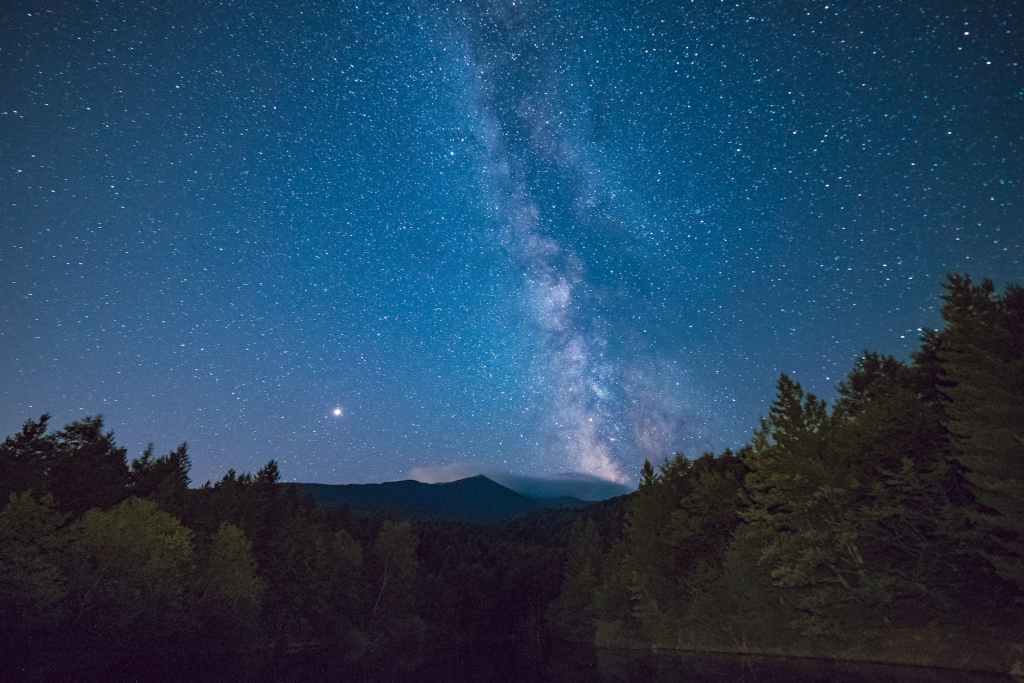
I think of the story of old Abram (renamed Abraham later) in Genesis 15. He was urged by an unknown God to leave all that was familiar to travel to a new land. Because of his obedience to this summons, he and his wife would have offspring who would benefit from their selfless journey into the unknown. They were understandably incredulous. In spite of their fervent hopes to be parents, they were childless. To underscore the promise, God led this skeptical man out of his tent and urged him to look at the night sky. The stars twinkled against the inky backdrop, awaiting the break of dawn. This strange God challenged him to count the stars. So impossibly great would be the number of his descendants who would inherit the land that he and his wife, Sarai, would be given.
That’s the rosy part of Abram’s vision-encounter. He soon fell into a deep sleep and God tacked on a message that would have sent me fleeing even into the darkest night. These innumerable descendants would be refugees in a strange land for 400 years, mistreated by those who claimed it as home. God would ultimately punish that nation for enslaving Abram’s progeny. “And, don’t worry about any of that, Abram, because you will live a long life and be buried next to your ancestors. Sweet dreams. So long. Bye Bye.”
End of unsolicited vision quest!
I’m stunned that old Abram stayed the course and his wife, Sarai, stuck with him!
We easily lose our bearings in the darkness of night.
As we enter a new year, we do so in good faith that God goes with us. We cannot navigate the rugged terrain relying on our own senses alone. We look across the ocean at wars fought over ancient hatreds. Our homegrown mass shootings influence far-away countries who assumed they were immune to such evil. Prejudices linger, families bicker, politics simmer as we walk into an election year with dread. Our heads spin as we grapple with our own role when facing staggering odds that somebody is going to get hurt in the process of living this year and our own security in the land feels in question. It’s enough to make us push back from the Times Square ball-drop. As we ring in a new year, we are confronted with our vulnerability.

Abram and Sarai followed the lead of this God—not necessarily because they liked the terms of the covenant. They walked forward in faith because they understood that God loved them. That was enough. God had a lifelong itinerary tailored specifically to their needs. They would never be alone. Their faith in this One who pointed them to the stars was passed on to their offspring. Their grandson, Jacob, when fleeing from his angry brother, was given a vision of a staircase cutting through the dark night and winding toward heaven. Angels effortlessly climbed up and down those stairs, reminding doubtful Jacob that God was with him when his future seemed uncertain. One generation after another walked the earth with an optimistic confidence derived from the knowledge that the Creator of all that is beautiful saw them, loved them and accompanied them.
So, we face the future today with optimism. We thank God for those relationships that reflect the love shown between faithful Abram and God. We rejoice in meaningful work and hospitable homes. We celebrate engagements and weddings, babies and baptisms. We laugh with friends and hug those with tears in their eyes. We covenant to love our earth and respect her needs. We do our part to advance the mandate that our country live as “one nation under God, indivisible, with liberty and justice for all.” In our own unique sphere of influence, we watch for the opportunities God places before us to help others find their way out of dark places. Like the elderly couple looking through their bifocals at the stars in the distant sky, we work toward the well-being of those yet unborn, generations we will never know. We believe that what we sacrifice for them is what gives our life worth.
God is praised in our self-giving. Take courage! God is near.

